team
Members of the Peyrégne Lab

Stéphane Peyrégne
Principal Investigator
stephanepeyregne (at) gmail.com
Stéphane is a CNRS researcher and group leader at the Institut Jacques Monod. A former student of the École Normale Supérieure de Lyon, he obtained his PhD at the Max Planck Institute for Evolutionary Anthropology under the supervision of Kay Prüfer and Svante Pääbo (Nobel Prize 2022), where he identified key genetic changes around the emergence of modern humans and reconstructed the history of Neandertals living around 120,000 years ago. He then carried out postdoctoral research with Benjamin Peter, developing a model of ancient DNA damage to estimate present-day human DNA contamination and describing ancient admixture events between modern humans and Neandertals around 200,000 years ago. He continued his postdoctoral work with Janet Kelso to reconstruct and analyse new Denisovan genomes, including the second high-quality Denisovan genome from an individual who lived 200,000 years ago.
His research combines paleogenomics and evolutionary analysis to reconstruct human population history and to understand when and how genetic variants relevant to human traits and disease arose, using human evolution as a framework for insights into present-day biology and health.

Fabien Fauchereau
Associate Professor
fabien.fauchereau (at) ijm.fr
Fabien is an Associate Professor at Université Paris Cité. His doctoral thesis at the Cochin Institute under J. Chelly and his postdoctoral research in T. Bourgeron’s group at the Institut Pasteur focused on the molecular basis of neurodevelopmental disorders, particularly autism spectrum disorders and reading-related learning disabilities. He subsequently gained experience in translational research during a postdoctoral fellowship at Sanofi supervised by T. Smirnova. He later joined the “Pathology of DNA Replication” team at the Jacques Monod Institute under G. Baldacci and J.-C. Cadoret, where he applied transcriptomic, molecular, and cellular approaches to identify therapeutic targets in cancer and molecules capable of targeting them. He then transitioned to paleogenomics, working with E.-M. Geigl and T. Grange before joining our laboratory.
His current research focuses on the diversity of pathogenic bacterial genomes across historical periods, studying their phylogenetic placement and tracing the evolution of their pathogenicity factors. More broadly, his work contributes to an interdisciplinary framework integrating paleogenomics, archaeology, and evolutionary biology to study human genetic diversity, animal domestication, and pathogen dynamics, within a One Health perspective linking the environment with human and animal health.

Maria Inês Gomes
Bioinformatics Engineer
mgomes (at) ijm.fr
Inês completed her MSc in Bioinformatics and Computational Biology at the NOVA School of Science and Technology in Lisbon. For her thesis, she benchmarked computational algorithms for enhanced drug discovery. She then worked as a Bioinformatics Associate Consultant at Clarivate in Barcelona, where she contributed to a range of large-scale genomics and multi-omics projects.
Her work now centers on developing robust and reproducible bioinformatics pipelines for the analysis of ancient and modern human genomic data, as well as their integration with GWAS and biobank datasets.
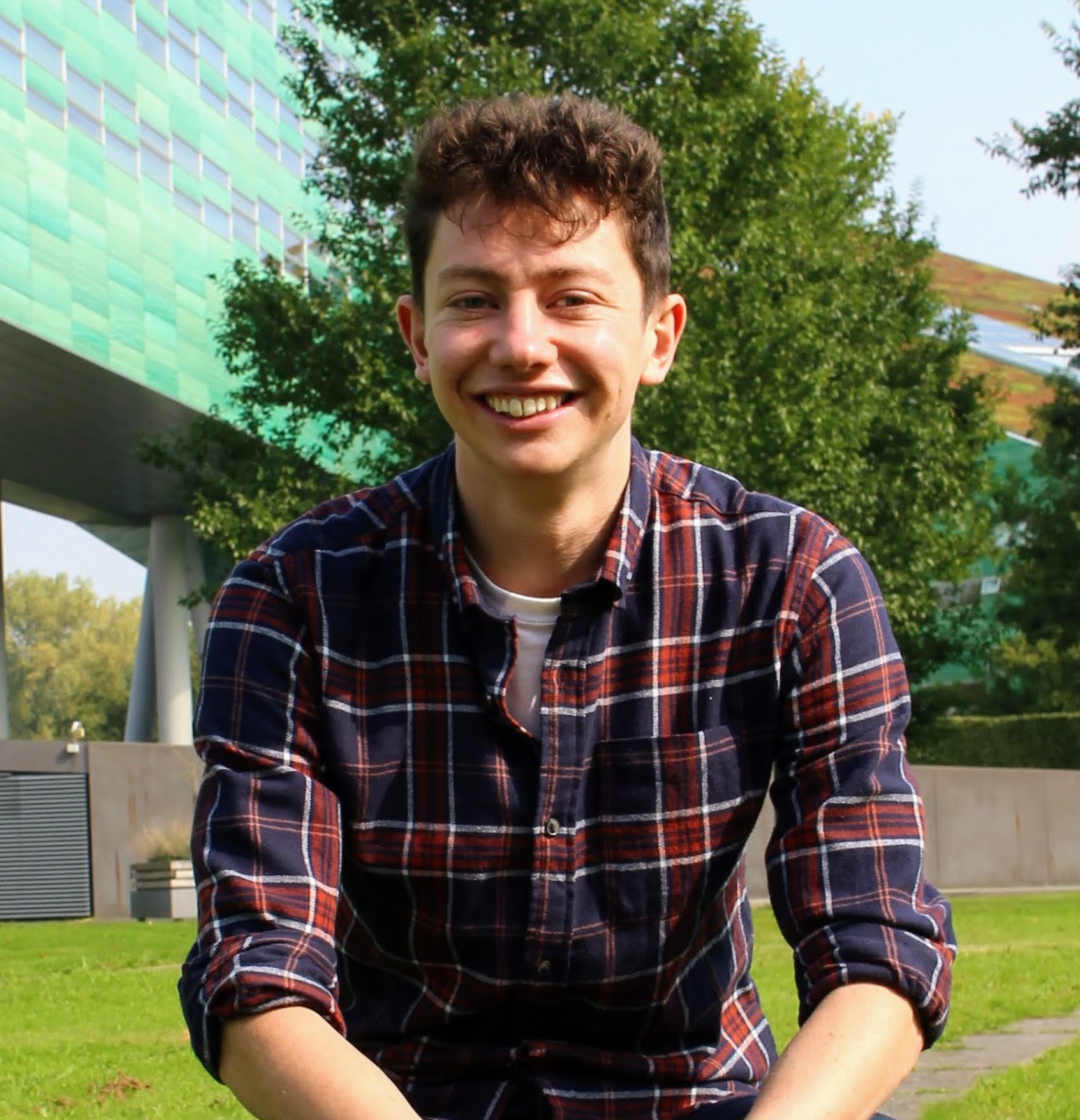
Euan Angus Young
Postdoctoral Researcher
euan.young (at) ijm.fr
Euan is a postdoctoral researcher working at the intersection of evolutionary biology, statistical genetics, and epidemiology. Euan did his PhD in evolutionary medicine at the University of Groningen, supervised by Hannah Dugdale, Virpi Lummaa, and Erik Postma. In his PhD, he used different statistical approaches to large human demographic and genomic datasets to explore the evolutionary processes shaping individual variation to ageing and disease. This included leveraging longitudinal variation across 250 years in Finnish demographic data to reveal the connection between human reproductive behaviour and lifespans, and using contemporary genomic and pathology data to explore the role of evolutionary trade-offs shaping genetic predispositions to breast cancer.
Euan is now exploring these questions across a broader spectrum of disease and deeper evolutionary timescales. To this end, he is developing robust methods that combine contemporary and paleogenomic data to assess when genetic variants associated with disease arose and disentangle the role of different evolutionary processes shaping their persistence to the present day.

Aleksei Kuznetsov
Research Engineer
aleksei.kuznetsov (at) ijm.fr
Aleksei is a research engineer with a background in physics, computational modelling, and scientific data analysis. He obtained his PhD in Physics from Université Bourgogne Franche-Comté, where his research focused on molecular spectroscopy. He also holds a Master’s degree in Physics of Photonics and Nanotechnology. He subsequently transitioned to bioinformatics, applying his experience in quantitative modelling and scientific programming to the study of human genomic variation.
His current work focuses on developing machine-learning methods to estimate when genetic variants arose during human evolution. He uses simulated and empirical ancient and present-day human genomes to build and benchmark models for mutation-age inference.